Basic information
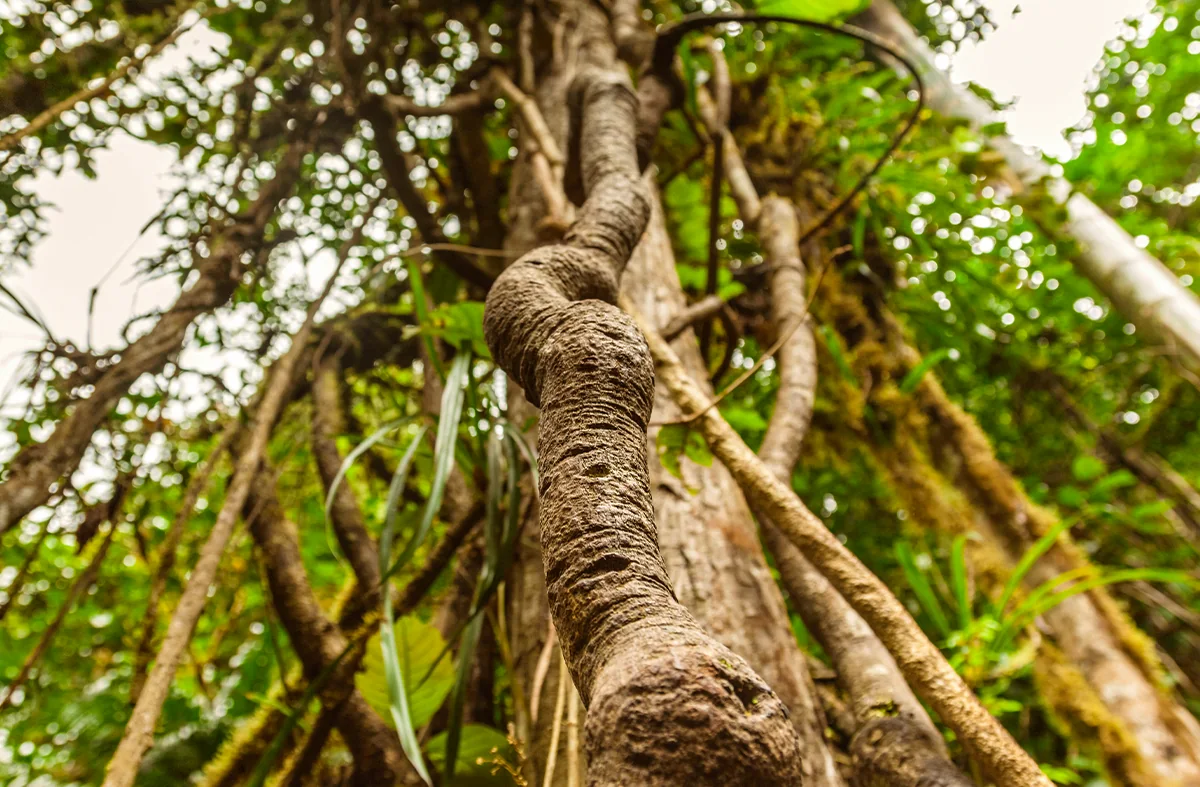
Ayahuasca is an ancient remedy that has been used for centuries by the indigenous cultures of South America to connect with nature and the gods, and to seek visions and profound spiritual insight. This powerful medicine is prepared by combining the Banisteriopsis caapi vine with the leaves of psychoactive plants such as chacruna or yagé, and is known for its transformative entheogenic effects.
Ayahuasca has now gained popularity around the world as a tool for spiritual exploration and personal growth. Many people turn to ayahuasca as a way of healing emotional trauma, breaking free from limiting patterns of thought and behaviour, and connecting with their spiritual essence.
Ayahuasca can open doors to spiritual awareness and to the healing of body and soul, making it a powerful tool for those seeking a path of personal and spiritual growth.
The benefits of ayahuasca have been the subject of research by Western scientists in recent decades, and numerous therapeutic properties have been discovered. According to some studies, ayahuasca may help treat mental health conditions such as depression, anxiety and post-traumatic stress disorder. A study published in the journal *Psychopharmacology* found that ayahuasca may be effective in reducing depressive symptoms in patients with treatment-resistant depression.
Furthermore, ayahuasca has also been used to treat addiction. A study carried out in Brazil found that ayahuasca can reduce the anxiety and depression associated with drug withdrawal, which may help patients stay sober in the long term. Other benefits of ayahuasca include improved memory and concentration, reduced stress and anxiety, and the promotion of creativity and introspection.
Despite its benefits, it is important that anyone wishing to take it should first find out more and seek advice from experts who will assess their individual circumstances and state of health; and, if they are deemed suitable and decide to take it, they should do so under the supervision of these experts in a safe and appropriate environment.
Origin
The origins of ayahuasca can be traced back to the ancient traditions of the indigenous peoples of the Amazon, who regard it as a sacred medicine capable of healing both body and spirit. According to ancestral wisdom, ayahuasca has the power to open the doors of perception and provide an experience of deep connection with the universe and the divine.
The history of ayahuasca dates back to ancient times, and there is archaeological evidence to suggest that it has been used in the Amazon region for at least 5,000 years. Ancient ceramic vessels have been found in the region which are believed to have been used to hold ayahuasca, indicating that this medicine has been valued by indigenous cultures since time immemorial.
Although other authors date it to other periods, such as between 500 BC and 500 AD, or even more recently. There is no clear record, but there is considerable evidence of its ancient origins.
The earliest recorded accounts in the West referring to ayahuasca date back to the 17th century, when Christian missionaries began to evangelise the indigenous peoples of the Amazon region.
In these accounts, the Jesuits describe ayahuasca as a sacred drink used in religious and healing ceremonies. The missionaries observed that the indigenous people drank ayahuasca to have visions and communicate with the spirits of nature, and also used it to treat physical and mental illnesses.
One of the first scientific reports on ayahuasca was published in 1851 by the German botanist Richard Spruce, who observed the indigenous peoples of the Rio Negro preparing and consuming the drink. Spruce described ayahuasca as a medicine that the indigenous people used to cure physical and mental illnesses, and he also observed its use in religious ceremonies.
In 1908, the German anthropologist Theodor Koch-Grünberg published his book *Zur ethnographie des Amazonasgebietes*, in which he described his own experiences with ayahuasca. Koch-Grünberg noted that ayahuasca was a central element of the culture of the indigenous peoples of the Amazon region, and that the drink played an important role in healing, religion and the social life of the communities.
In the 1950s, the Brazilian psychiatrist Hernando da Silva Ramos began researching the effects of ayahuasca on mental health, observing that the drink had antidepressant and anxiolytic properties. This pioneering work was followed by other researchers, including the Peruvian psychiatrist Luis Eduardo Luna, who has studied the effects of ayahuasca on creativity and consciousness.
Composition
The exact composition of ayahuasca can vary depending on the region and the ethnic group preparing it, but it typically consists of two plants: the ayahuasca vine (Banisteriopsis caapi) and the chacruna leaf (Psychotria viridis).
The ayahuasca vine contains a number of compounds known as beta-carbolines, including harmine, tetrahydroharmine and harmaline, which act as monoamine oxidase inhibitors (MAOIs). These compounds are essential for ayahuasca’s psychoactive effects, as they inhibit the breakdown of dimethyltryptamine (DMT) present in the chacruna leaf.
DMT is a psychoactive compound found naturally in a variety of plants and animals, including humans. When ingested on its own, DMT is not orally active because it is rapidly metabolised by the enzyme monoamine oxidase in the gastrointestinal tract. However, when combined with the MAO inhibitors present in the ayahuasca vine, DMT becomes active and produces intense psychedelic effects.
The chacruna leaf contains high levels of DMT and is the main source of this compound in ayahuasca. More than 50 plants are known to contain DMT in varying amounts, and it is also found in the bodies of many mammals, including humans.
Its effects and its natural presence in the human body have led Rick Strassman and many other researchers to believe that DMT may be responsible for inducing mystical experiences during events and states such as death, near-death experiences, birth, psychosis and dreams.
In addition to the ayahuasca vine and the chacruna leaf, other plants may be used in the preparation of ayahuasca in different cultures. For example, chaliponga (Diplopterys cabrerana) is a plant commonly used in the Peruvian Amazon region as an alternative to the chacruna leaf.
Overall, the composition of ayahuasca is complex and can vary widely, depending on the plants and the preparation method used. However, the combination of the beta-carbolines found in the ayahuasca vine and the DMT found in the chacruna leaf is essential for the psychoactive and spiritual effects of ayahuasca.
Effects
What happens under the influence of ayahuasca is difficult to put into words, as the experience is unique and different for each person. Even so, speaking in very general terms, we can summarise some common themes in a typical ayahuasca experience.
The effects it produces are profound and can be transformative, but they can also be intense and challenging.
When drinking ayahuasca, you may experience a change in your perception of the world around you. Colours may appear brighter, sounds more intense and patterns more complex. You may also feel more connected to nature and to other people.
As the medicine begins to take effect, you may experience visions and intense emotional sensations. You may feel swept up in a whirlwind of thoughts and feelings, which can be overwhelming at first.
It is also possible to experience nausea and vomiting during the journey. One way of thinking about this process is that ayahuasca itself is not necessarily something the body rejects, but rather something that enters and flows through your entire being, seeking out negative energy and toxicity in order to expel it; the purging is therefore seen as a way of clearing waste from the system.
The purging may also occur rectally, requiring a visit to the toilet during the ceremony. Although in some rare cases, the effects of ayahuasca may be minimal and cause only mild nausea.
The ayahuasca purge is nothing to worry about, as it is a key aspect of the drink for the indigenous people who use it in their rituals. According to them, it is only after purging that the barriers at deep levels of one’s being can be unblocked, allowing the ayahuasca to work properly. Although it may seem daunting, purging ultimately relieves the feeling of nausea and is seen as a form of liberation and cleansing.
Finally, it is possible to feel a sense of connection with a higher power, whether that be a deity or a universal energy. This can be a deeply spiritual experience that helps one find meaning and purpose in life.
Potential benefits
The potential benefits of drinking ayahuasca appear to far outweigh the risks.
In addition to anecdotal reports of spiritual development, ayahuasca is increasingly being regarded as a potential therapeutic substance within the scientific community. Preliminary studies suggest that it may be effective in treating mental health conditions such as addiction, anxiety and depression, which has enhanced its reputation as a psychological remedy, and this has been empirically confirmed.
In addition to anecdotal reports of spiritual development, ayahuasca is increasingly being regarded as a potential therapeutic substance within the scientific community. Preliminary studies suggest that it may be effective in treating mental health conditions such as addiction, anxiety and depression, which has enhanced its reputation as a psychological remedy, and this has been empirically confirmed.
General wellbeing and health
Some people think that ayahuasca should only be taken if you have mental health problems. However, there are many people who take it without suffering from such problems, as it can be of great help to healthy people in their personal growth and spiritual journey.
By offering deep insight and perspectives on difficult questions, such as life-changing choices and creative blocks, ayahuasca appears to dissolve problematic patterns of emotional behaviour that can lead us to self-destructive thoughts and actions.
In fact, recent studies suggest that ayahuasca enhances our ability to think divergently and reduces convergent thinking, enabling us to step outside our “mental box” and consider different perspectives. Furthermore, this brew stimulates the growth of new brain cells and reduces internal reactivity, which changes the way we perceive and react.
Although the ayahuasca experience can be very profound and enlightening, its true value can only be realised through deep personal reflection and appropriate respect and “integration”.
Ayahuasca is not just a remedy, but also a spirit and a way of life for many. By representing a significant paradigm shift in the way we understand illness, wellbeing and human flourishing, ayahuasca appears to play a key role on the path to healing and personal growth.
Health and risks
Studies carried out on both animals and healthy humans have shown that ayahuasca can be safe, both physically and psychologically, provided its composition is known and it is administered in controlled doses and in suitable settings with the necessary support.
However, it is important to bear in mind that there are risks associated with the use of ayahuasca which must be taken into account before deciding to use it. These risks may be physical, due to the pharmacology of the substance and possible interactions, or psychological, due to the nature of the experience that ayahuasca can induce.
People with serious mental health conditions, such as schizophrenia or bipolar disorder, should avoid ayahuasca as it may trigger latent psychosis in those with a personal or family history of psychosis. The most incompatible medicines are usually antidepressants. Recreational drugs should also not be taken before or after consuming ayahuasca, particularly stimulants.
It is also important to take care if you are taking any medication, and to inform the facilitator of your state of health.
It is also important to take care if you are taking any medication, and to inform the facilitator of your state of health.
Preparation before use
Preparing to take ayahuasca involves following a series of steps in the days or weeks leading up to the ceremony. Essentially, this process includes:
- To rest and look after your mind, spirit and body through a healthy diet.
- To establish and reinforce the intentions for the ceremony.
- Prepare the personal items required for the ceremony.
- Carry out any additional cleaning before the ceremony, if necessary.
In short, the aim is to allow the experience to take root in the mind, to reduce anxiety, to prepare oneself to surrender to the experience, and to prepare mentally for the integration that follows the ceremony.
Diet
Although the term “diet” may seem to refer only to food, it is in fact a comprehensive regimen of abstaining from everything that is harmful to the body, mind and soul.
Generally speaking, the Diet involves avoiding salt, red meat, sugar, alcohol, drugs and sex. These recommendations can also be extended to include any unhealthy, fatty, overripe, fermented, pickled, aged, preserved or processed foods, as well as those high in gluten or yeast, chocolate with a high cocoa content and coffee.
Although most foods are safe to eat before the ceremony, there are some that should be avoided. Tyramine, a compound found in certain foods and drinks such as sourdough bread, fermented dairy products, processed meats, some pulses, pickles, draught beer, cocoa and wine, can interact adversely with ayahuasca. If foods containing tyramine are consumed, the monoamine oxidase inhibitors (MAOIs) present in the Banisteriopsis caapi vine may cause adverse reactions such as palpitations, nausea and headaches. It is therefore recommended that you follow the Diet for at least a few days before and after the ceremony.
As well as avoiding alcohol, drugs and foods high in tyramine, other recommendations of the Diet – such as reducing stress and distractions, focusing on one’s intentions, and abstaining from sex and masturbation – serve to achieve an optimal state of energy for the ceremony, rather than simply protecting oneself from health risks. These guidelines provide peace of mind, physical refreshment, mental clarity and concentration, which help ensure the success of spiritual quests. People with cardiovascular disease or psychosis are strongly advised to avoid drinking ayahuasca. Do not stop, reduce or change any treatment in order to take part in a retreat without medical advice.
Intention
It is essential that you set a clear intention before taking ayahuasca. Being aware of your state of mind and personal circumstances, and having an idea of what you wish to learn, can be very beneficial. The people of the Amazon regard ayahuasca as “the master plant”. If you go into the experience without an intention, you may end up gaining nothing from it. On the other hand, if you have an inappropriate intention – such as simply wanting to “get high” as if it were just another drug – you could end up in a dark and negative place.
Your intention doesn’t need to be impressive; it simply needs to be sincere and meaningful to you. It should be a clear and personal statement or question that reflects your deepest desires. When taking ayahuasca, you have the opportunity to connect with a profound inner wisdom. By setting a pure and honest intention, you are opening the door to receiving an authentic and meaningful insight.
 Spanish
 English